Global commerce gives the impression of fluid, borderless movement: online shopping has conditioned us to expect a universal catalogue, instant availability, and frictionless delivery. For businesses operating behind the scenes, the reality is quite different. Goods move across national boundaries through a dense legal infrastructure that determines what the product is, where it comes from, how much it is worth, and what a business must pay for the privilege of importing it.
This legal machinery - customs classification, origin rules, valuation, duty calculation, exemptions, transit procedures, and compliance - is not a marginal administrative function. Across industries, customs costs represent between 2–5% of the total cost of goods imported, and compliance activities add an additional 10–20% in process and delay costs. For a mid-sized EU importer with an annual import value of €50 million, customs-related frictions can represent €6–9 million of annual operating cost.
The hidden truth is that customs law provides a strategic lever for businesses for companies that understand it as such.
Jump to Case Study: A Mid-Sized EU Consumer Electronics Company for a quantitative example of how customs can be used to improve unit economics.
The Economic Architecture of Customs
EU customs law rests on three substantive foundations: classification, origin, and valuation. Each is deceptively technical, but each has direct financial implications.
Classification determines under which tariff category a product falls. Two seemingly similar products may carry duty rates that differ by several percentage points. Misclassification can lead to millions in overpayments, penalties, or shipment delays.
Origin determines the “economic nationality” of a product, not based on where it ships from but where value was created. Origin matters because preferential trade agreements can reduce duties to zero for qualifying products. For businesses, this is an arbitrage opportunity: structuring production to qualify for preferential origin can unlock substantial margin.
Valuation defines the tax base. Under EU law, valuation must capture the “real economic value” of goods at the point they enter the customs territory. A business that underestimates the dutiable value risks penalties; a business that overestimates it leaves money on the table. The difference between compliant and optimal valuation is non-trivial: valuation errors of 3–8% of landed cost are common across industries.
These rules are not abstract legal mechanics - they are levers that materially shape import economics. Decisions at this layer influence unit economics, pricing strategy, cash flow, and ultimately, competitiveness.
Customs as Friction: Latency, Risk, and Lost Margin
Even when businesses understand the underlying rules, they face operational friction. Customs processes are still dominated by manual data gathering, paper evidence, transactional intermediaries, and heterogeneous national IT systems. The result is latency: delays at ports, unexpected inspections, missing documentation, and fragmented accountability.
Every delay has cost. A one-day delay in clearance for perishable or seasonal goods can lead to margin destruction through waste, stock-outs, or discounting. For high-volume e-commerce sellers, a 24-hour delay across shipments can cascade into cancellations, reputational harm, and inventory imbalance that can take months to correct.
There is also risk. Customs authorities operate on a risk-based control model, and non-compliance - even when accidental - can trigger audits, penalties, or seizure. In the EU, penalties are designed to be “effective, proportionate and dissuasive,” which leaves room for wide variation between jurisdictions. A procedural error in Germany may generate an administrative fine; the same error in Italy can escalate into criminal liability.
These realities frame customs not as a peripheral compliance burden, but as a business-critical function with material financial exposure.
Customs as Optimization: When Knowledge Creates Margin
While customs introduces friction, it also offers opportunities for cost reduction and strategic optimization, if businesses are capable of identifying and executing them.
Businesses can eliminate duties entirely by using special procedures such as inward processing, which allows companies to import components duty-free, process them in the EU, and only pay duty on the value of non-EU inputs if they eventually sell the finished goods domestically. For companies importing intermediate goods, this can reduce duty expenditure by 50–100% depending on product mix.
Returned Goods Relief prevents re-taxation when goods exported from the EU return within three years. For companies with high return rates, this distinction can mean recovering 100% of duties paid.
Even low-value exemptions, such as the €150 de minimis rule for small consignments, enable cost avoidance in high-frequency direct-to-consumer logistics.
Collectively, these mechanisms can unlock 3–8% of landed cost optimization, equivalent to several million euros annually for mid-market firms.
The opportunity exists. The problem is execution, customs optimization today requires deep expertise, structured data, and operational discipline. Most companies lack all three.
Case Study: A Mid-Sized EU Consumer Electronics Company
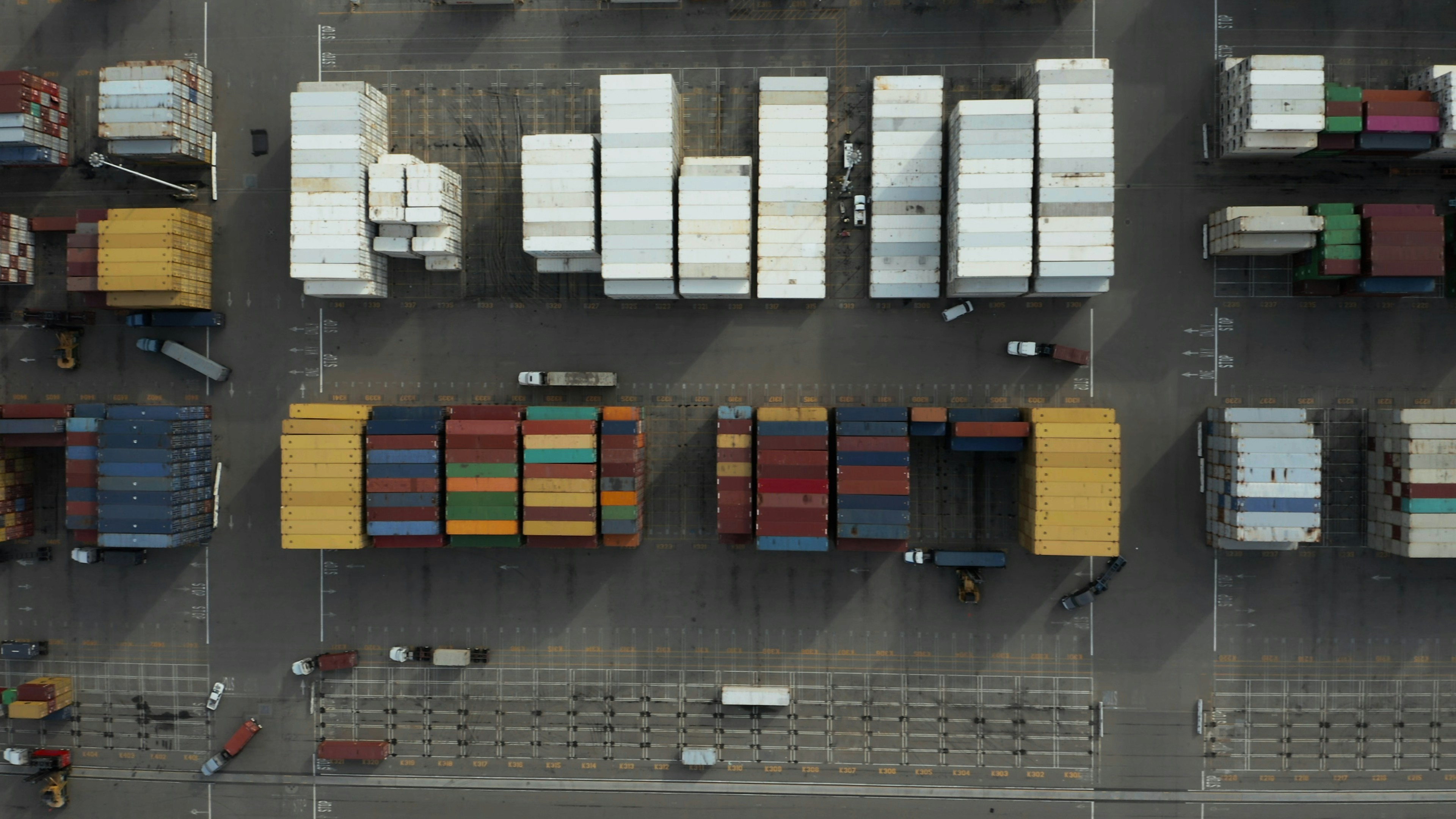
Let’s consider a mid-sized EU consumer electronics company, importing €80 million worth of components annually and assembling finished products in Central Europe. Historically, the company treated customs as a compliance cost, not as a strategic input.
Their import model looked straightforward:
Import components from Asia -> Assemble in the EU -> Sell across EU markets
But three customs insights dramatically shifted their economics:
1. Misclassification: The 3% Leak: A core input had been classified under a tariff with a 3% duty rate, a reclassification to a more precise subheading reduced the rate to 0%.
Impact: Duty overpayment on €20M: €600k/year, 3-year retroclaim: €1.4M, Margin uplift: +0.75 p.p. with no operational change
2. Preferential Origin: Engineering Arbitrage: Metal casings originally contained 48% non-originating value, disqualifying them from preferential tariffs. By shifting a finishing step to a country eligible for cumulation, the non-originating share fell to 28%, qualifying for 0% duty.
Impact: On €25M with 4.2% duty: €1.05M saved, Added cost: €120k, Net annual gain: €930k, A supply chain tweak delivered more EBITDA than a 6% price increase.
3. Inward Processing: Taxing Only Imported Content: The company had been paying duty on the full value of finished goods sold domestically. Inward processing shifted duty to only the imported share, and exempted exports entirely.
Impact: Duty base dropped from €35M → €14M, Annual savings: €630k
Annual Financial Uplift
| Lever | Annual Savings |
|---|---|
| Classification optimization | €600k |
| Origin optimization | €930k |
| Inward processing | €630k |
| Total | €2.16M |
Over three years, that’s €6.5M in margin, unlocked without new products, new markets, or pricing changes.
Why This Value Is Usually Missed
These outcomes required a 9-month specialist effort involving audits, origin analysis, supply chain modeling, and complex authorizations. Most firms lack the capability to even identify these opportunities, let alone execute them.
Customs value today depends on rare expertise + manual workflows + messy data.
Each of the optimizations above can be transformed into an agentic capability that continuously:
- Monitors product flows
- Simulates regulatory pathways
- Quantifies financial upside
- Recommends structural changes
If automation captured just 30% of potential value, large importers could unlock €2–5M in annual EBITDA without a human-led initiative. In this electronics case, 30% automation = ~€650k/year, equivalent to a 1.5% gross margin boost on autopilot.
The Need for Product Innovation: Autonomous Trade Infrastructure
Viewed through a product lens, customs is not a legal field but an optimization problem constrained by incomplete information, latency, and risk. Automation is a natural strategic response, but the next horizon is not simple automation; it is agentic autonomy.
Customs is uniquely suited to agentic AI because:
- Rules are structured, explicit, and machine-interpretable
- Economic outcomes are quantifiable
- Errors are costly
- Actions are procedural and auditable
- Data is fragmented and heterogeneous
Agentic systems can operate not only as assistants, but as autonomous actors that:
- Classify products based on descriptions, technical specs, and historical patterns
- Determine origin status under preferential agreements
- Detect undervaluation or overvaluation in real time
- Model duty scenarios across jurisdictions
- Prepare and submit customs declarations
- Trigger corrective actions when violations are likely
- Identify claims for repayment or remission
- Optimize routing to avoid risk hotspots
In mature deployment, such systems could reduce:
- Overpayment of duties by 30–60%
- Processing time by 50–80%
- Manual touchpoints by 90%
- Clearance delays by 1–3 days on average
For a business processing €100 million in imports annually, this is not incremental - it is transformative. It can change gross margin by multiple percentage points without altering pricing or product architecture.
The value proposition is not cost-saving; it is strategic resilience, speed to market, and cash-flow efficiency.
Borders as Financial Architecture
The conventional view treats borders as geopolitical walls; the product view treats them as economic interfaces. When a product crosses a border, it triggers both regulatory processing and financial settlement. That moment is not merely a control checkpoint, it is a monetizable event.
The goal of businesses should not be to eliminate border friction, that is impossible. The goal should be to convert border friction into structured, optimizable workflows, governed by systems that are proactive, repeatable, and intelligent.
In future trade infrastructure, customs will not be processed “by exception.” It will run continuously, autonomously, and economically.
The winners of global commerce will not simply build better supply chains. They will build systems that reason about economics, law, and risk, at machine speed.
My Conclusion
EU customs law may appear procedural, but its influence is structural. It directly shapes cost, speed, compliance, and competitiveness. At present, businesses treat customs as a mandatory administrative function, a cost of doing business. In reality, it is a system of incentives, reliefs, and arbitrage opportunities that can materially change unit economics.
Businesses that understand customs as a strategic lever, and who can operationalize that insight, will outperform competitors on cost, reliability, and responsiveness.
The next generation of trade infrastructure will not be built by lawyers or freight brokers, but by product teams that combine regulatory understanding with automation, data architecture, and agentic intelligence.
Borders are not just lines on maps; they are momentary negotiations between regulation and profit. In a world defined by efficiency and uncertainty, whoever automates those negotiations will define the next decade of global trade.